
The creator economy has changed the way people build careers.
What once started as posting videos, sharing photos, or creating online communities has evolved into full businesses with brand partnerships, products, podcasts, courses, and companies built around personal brands.
With that growth comes a new responsibility: creators need to protect what they create.
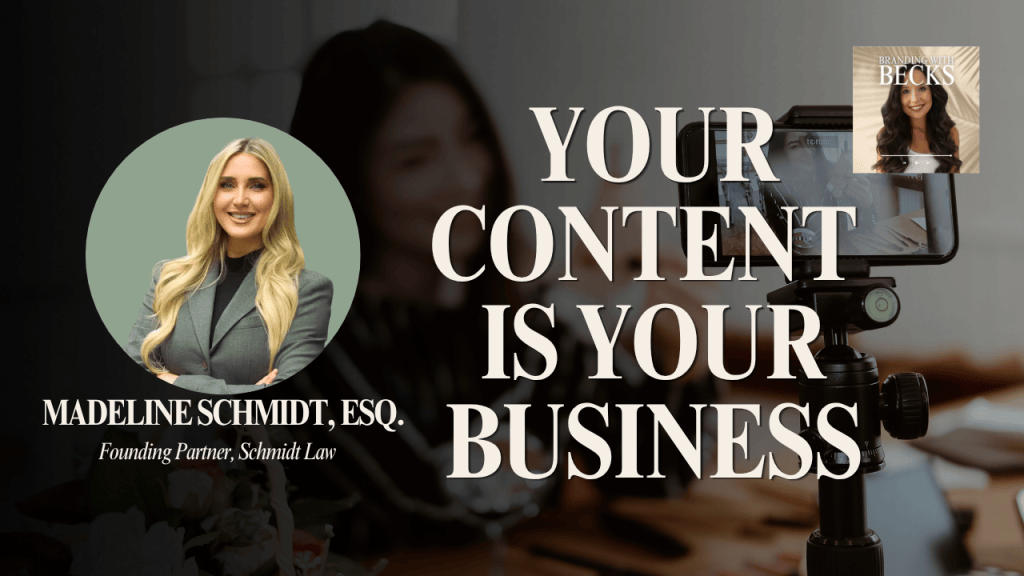
In this episode of Branding with Becks, Madeline Schmidt, Esq, founder of Schmidt Law, shares why creators should start thinking like business owners earlier than they expect and the legal steps that can protect their future.
Creators Become Business Owners Sooner Than They Think
Many creators don’t realize that the transition from hobby to business happens quickly.
The moment a brand pays you for content, you’re no longer simply creating, you’re entering into a business relationship.
That means understanding contracts, ownership, and rights becomes essential.
A creator’s audience, content, voice, and personal brand are valuable assets. Protecting those assets should be part of the strategy from the beginning.
The Biggest Mistake: Focusing Only on the Fee
When negotiating brand deals, many creators focus on one question:
“How much am I getting paid?”
While compensation matters, Madeline explains that the bigger question is:
“What rights am I giving away?”
A lower-paying deal with limited usage rights may be more valuable than a larger payment that allows a brand unlimited access to your content forever.
Creators should carefully review:
- Usage rights
- Exclusivity clauses
- Intellectual property ownership
- Payment terms
- Termination rights
- Indemnification clauses
The details hidden in the contract can impact your opportunities long after a campaign ends.
Your Content Is an Asset
As creators expand beyond social media into products, podcasts, courses, and companies, protecting their intellectual property becomes even more important.
This may include:
- Trademarking a brand name
- Protecting original content
- Creating the right business structure
- Having clear agreements with partners and contractors
Building a recognizable brand takes time. Legal protections help ensure creators maintain control over what they’ve built.
AI Is Changing Creator Rights
Artificial intelligence has created new opportunities—but also new questions.
As brands use AI tools to edit, replicate, and transform content, creators need to understand how their likeness, voice, and work may be used.
Creators should ask:
- Can my content be altered using AI?
- Can my voice or likeness be recreated?
- Can my content be used to train AI models?
- How long does the brand have permission to use my work?
The contracts of the future will need to address technology that didn’t exist when many traditional agreements were written.
Legal Protection Is an Investment
Many creators wait until there’s a problem before seeking legal support.
Madeline compares this to financial planning: putting protections in place early is often much easier and more affordable than trying to fix a dispute later.
The goal of legal strategy isn’t to make business complicated.
It’s to give creators confidence to grow.
Treat Your Creativity Like a Business
The creator economy rewards people who build intentionally.
Creating content is only the beginning. The creators who build sustainable careers understand that their ideas, audience, and personal brands have real value.
Protecting your work isn’t about expecting problems.
It’s about preparing for opportunities.
Listen to the Full Episode
Tune in to hear Madeline Schmidt share what every creator should know about contracts, brand deals, AI, intellectual property, and building a business beyond social media.


Leave a Reply